C-Poll

The latest C-Poll is closed. You can read all about it here!

July 20, 2009

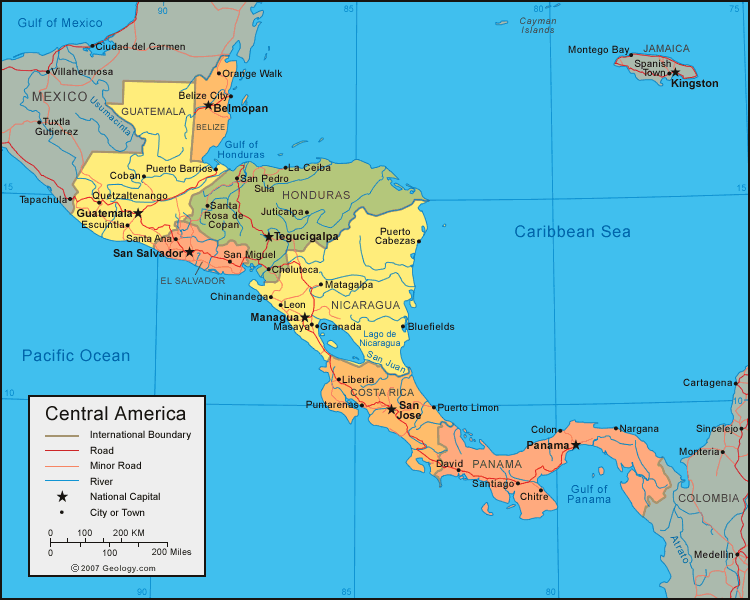
Reuters contradicts its own shoddy reporting on Honduran crisis

It’s almost like a reflex.  Reuters leads off a July 20 dispatch on the Honduran constitutional crisis in this way (emphasis added):
Honduras' political foes are on a collision course after negotiations collapsed and deposed President Manuel Zelaya vowed to return home despite warnings from a defiant de facto government.
Zelaya says resistance is being organized in Honduras to pave the way for his return this weekend and that nobody can stop him. The interim government installed after the June 28 military coup has threatened to arrest Zelaya if he returns and crack down on any protesters who stir trouble.
People who read only the opening paragraphs of news articles will come away with a reinforcement of the oft-repeated – but false – claim that Zelaya was deposed by a military coup.
Read a little further, and one will see that Reuters itself can’t decide whether or not the events of June 28 constituted a military coup.
In a section entitled “Unusual Coup”, we see laid out many of the facts demonstrating that the military, far from instigating Zelaya’s removal from power, was actually carrying out the constitutionally lawful order for his arrest:
Zelaya was expelled from the textile and coffee exporting country in his pajamas in the middle of the night. He had upset his political rivals by seeking to lift presidential term limits, and the army moved against him after the Supreme [Court] ordered his arrest.
[…] The Honduran coup is an unusual case. Unlike those that battered Latin America in the 1970s and 1980s, Zelaya's ouster was approved by the Supreme Court and Congress as well as Catholic Church leaders in the country. There is also no military strongman in the picture this time.
So, get this straight: The Honduran Supreme Court lawfully ordered Zelaya’s arrest, and the military lawfully carried out the arrest order.  Honduras’ Congress (including Zelaya’s own political party) endorsed this lawful order. 
The only way that the military exceeded its authority was by exiling the president rather than merely taking him into custody.  Even so, once the operation was completed, the military stood down.  They have no influence over the interim president – from Zelaya’s political party, by the way – that Congress lawfully selected to take Zelaya’s place.
Despite the cognitive dissonance abundantly evident in this article, Reuters seems incapable of admitting that no coup – military or otherwise – took place in Honduras on June 28.
The article ends on an encouraging note:
The interim government, which has been denied around $200 million in multilateral aid and $16.5 million in U.S. military aid and is at risk of regional trade sanctions, insists it can and will stand up to the international pressure.
Honduras knows that it has few if any friends in this crisis.  For some reason, it seems like the whole world – governments and media alike – is determined to snuff out the liberty of this tiny republic.  Good on the people and government of Honduras for refusing to refusing to buckle under  the unbelievable pressure.

July 15, 2009

Government-run health care, v 1.0

Here’s the version the Democrats in the House of Representatives passed, as interpreted by the Republican staff on the Joint Economic Committee.

I call it version 1.0, because this version still includes private insurers.  Later versions may do away with that component.

Click image to enlarge (or click the link above to view the original, which is even larger), not that it will aid comprehension very much.

July 13, 2009

The essence of the case for confirming Sonia Sotomayor

  1. Sonia Sotomayor has a compelling life story.
  2. [insert heartwarming details here]
  3. Therefore, give her a lifetime appointment to the most powerful court in the land.
  4. If you don’t vote for her, you’re a racist misogynist.
Did I miss any details?

(Thanks to Dysart at FR for inspiring #4)

Senator Al Franken channels Humpty Dumpty at Sotomayor hearing

RealClearPolitics has posted a video of today’s USSC confirmation hearing where newbie senator Al Franken praised Sonia Sotomayor as “the most experienced Supreme Court nominee in 100 years”.

Seriously? More experienced than any other nominee to come before the Senate in the past 100 years?

 “I do not think it means what you think it means.”

Franken’s superlative abuse reminds me of an exchange between Humpty Dumpty and Alice  in Lewis Carroll’s classic story Through the Looking Glass (with the word “glory” replaced with “experience”):
‘There's experience for you!’

‘I don't know what you mean by "experience",’ Alice said.

Humpty Dumpty smiled contemptuously. ‘Of course you don't -- till I tell you. I meant "there's a nice knock-down argument for you!"’

‘But "experience" doesn't mean "a nice knock-down argument",’ Alice objected.

‘When I use a word,’ Humpty Dumpty said, in rather a scornful tone, ‘it means just what I choose it to mean -- neither more nor less.’

‘The question is,’ said Alice, ‘whether you can make words mean so many different things.’

‘The question is,’ said Humpty Dumpty, ‘which is to be master -- that's all.’
Thank you, Minnesota.

Did Senator Leahy say this with a straight face?

Leahy, in his opening remarks at today’s confirmation hearing for USSC nominee Sonia Sotomayor, as reported by Politico (emphasis added):
“Unfortunately, some have sought to twist her words and her record and to engage in partisan political attacks,” Leahy complained. “That’s not the American way. That’s not the Senate way.”
Anyone old enough to remember the Clarence Thomas confirmation hearings would know that Leahy is not telling the truth here.

This excerpt from a 2001 (republished in 2004) National Review article shows how sincere Leahy is regarding his pious proclamation today:
Leahy furthered distinguished himself in 1991 as the first senator to come out against Clarence Thomas (this was even before the allegations of Anita Hill). He hammered Thomas relentlessly. At one point, in a typical Leahy flourish, he said, "You describe yourself as a conservative. Well, most Vermonters are conservative, too" — but Thomas, in Leahy's eyes, wasn't the right kind of conservative. Later, in a floor statement, Leahy said, "I cannot promise the people of Vermont that I'm sure this nominee will protect their rights." And he avowed, most richly, "The last thing I seek in a Supreme Court justice is ideology."

Leahy became a major player on the Judiciary Committee in 1987, when Democrats wrested control of the Senate from Republicans. Biden was chairman, but Leahy was named head of a task force to scrutinize (or harass or delay or upend) Republican nominees. At last, he vowed, Democrats would "play hardball" (and this was years before Chris Matthews became a national celebrity). "No iffy nominees are going to get through now," Leahy crowed. The result was that nominees, many of them, were pecked at and left twisting in the wind. Interesting, in light of a later event, is that Leahy, back in '87, faulted the American Bar Association for its recommendations on judicial nominees. He said, "I have often found the ABA process to be perfunctory at best. I've often found it inadequate." According to the Washington Post, "Leahy said his task force would interview more lawyers, litigants, and local citizens instead of relying on the ABA." Leahy's entire approach in this period was: go slow, put the screws on, block.

Fred Thompson: ‘Absurd’ for Senators to base judicial confirmation vote on nominee’s testimony at hearing

FredPac e-mail alert posted the text at Free Republic.  Emphasis added.

It is expected that Senators will say that they want to wait and see what Judge Sotomayor will say at her confirmation hearing before they decide how they will vote.

This is understandable, I suppose, but from my experience, what a nominee says during his or her hearing, while certainly not irrelevant, is one of the least important considerations upon which they should base their vote. Nominee’s judicial and professional record, along with their public statements and reputation for integrity, are much more reliable indicators as to the kind of judge they will be. Our Founding Father recognized this early on, and it is the main reason confirmation hearings were not held on a regular basis until the 1950s.

There are two things that work against any substantive new information being revealed in a confirmation hearing.    
First a nominee can and should refuse to go very far in giving their opinion regarding any legal issue that might come before the Supreme Court in the future. That, of course, covers most any legal issue.

Second, in 1990 the distinguished jurist, Robert Bork, refused to subject himself to the usual dog and pony Q and A, “how to handle the senators” sessions now given to nominees in preparation for their hearings, the so-called "murder board."  During the hearings he engaged in an open and candid dialogue with regard to his judicial philosophy. We know how that turned out. The odds are great that never again will a nominee make the mistake of committing candor.     

For some time now everyone has understood the name of the game: Take as much off the table as possible as inappropriate for discussion. Then, dance around the rest. When you get a question that you're expected to answer, try to sound as knowledgeable as possible, but play for time and never say anything committee members would find objectionable.         

So the process is basically for the purpose of giving the nominee the opportunity to commit a gaffe of other unforced error. Then the nominee may be denied confirmation, not so much for their lack of qualifications or even their judicial philosophy, but for their not being clever of artful enough to win the game.

I would suggest that for a person to be judged on the basis of a few days of practiced, self-serving comments and obfuscation, instead  of their entire life and record is absurd. And to think that their service on the Supreme Court would be consistent with their statements before a committee they will likely never sit before again, instead of their record is inconsistent with both logic and experience.     

In other words, it’s foolish in the extreme to rush into marriage thinking you know a girl, when everything you think you know about her is based on what she told you while you were out on a date.

Regarding the curious tendency of modern people to willingly air their dirty laundry for all to see

The Wall Street Journal has an article July 13 about how the collapsing economy has thrown a monkey wrench into many divorce proceedings:

Rhonda Brewster and her husband have decided they don't want to be married to each other anymore. But while they're ready to move on, they still can't move out.

They don't want to sell their home, in Huntsville, Ala., in a down market. They can't afford two households until Ms. Brewster finds steady work. So for now, they are living under the same roof but on separate floors.

The "kids are OK with it." says Ms. Brewster, a 39-year-old freelance writer and stay-at-home mother. "They just know that mommy lives upstairs and daddy lives in the basement."

Unwinding the ties of matrimony is rarely simple or inexpensive, but for many couples, the sour economy is complicating the process further.

Divorce lawyers say many couples are delaying the decision to dissolve marriages and are staying in unpleasant situations for fear of being on their own at a time of economic uncertainty. Others are being forced to live together after the divorce is final for financial convenience. That can strain the emotions and result in awkward negotiations about subjects like dating.

The article goes on to give several more examples of the phenomenon.

I don’t know if I’m just naïve, but I don’t understand how so many of these cases became public knowledge, to the point that a Wall Street Journal reporter got wind of them and was able to compile an article about them.

What would make these people willing to broadcast their marriage failures to the entire world? (Future spouses of these folks, take note.)

I could understand the greed motive of those who act out on the reality shows, who are willing to degrade themselves in front of millions in exchange for a chance at some cash – although even on reality shows, some are willing to degrade themselves for free. It’s still horrifying and repulsive, but (when there’s a possibility of winning money) still understandable.

But what’s in it for these folks in the WSJ article?

July 12, 2009

Mark Steyn: Environmentalism and health care are perfect instruments of despotic rule

Excerpt from a July 11 Mark Steyn essay (emphasis added):
Beginning with FDR, wily statists justified the massive expansion of federal power under ever more elastic definitions of the commerce clause. For Obama-era control freaks, the environment and health care are the commerce clause supersized. They establish the pretext for the regulation of everything: If the government is obligated to cure you of illness, it has an interest in preventing you from getting ill in the first place — by regulating what you eat, how you live, the choices you make from the moment you get up in the morning. Likewise, if everything you do impacts “the environment,” then the environment is an all-purpose umbrella for regulating everything you do. It’s the most convenient and romantic justification for what the title of Paul Rahe’s new book rightly identifies as “soft despotism.”

July 10, 2009

Obama receives an unwelcome endorsement of his economic plan

At least I assume it’s unwelcome.  From Foreign Policy’s “Passport” blog, July 9:

Russian Communist Party leader Gennady Zyuganov says he enjoyed getting to meet Barack Obama along with other members of the Russian opposition this week and even saw eye-to-eye with the U.S. president on a few things. Interfax reports via Johnson's Russia List:

"I said that I had thoroughly studied the U.S. president's anti-crisis program, that I liked it, as well as that it is socially oriented and primarily aimed at supporting poor people and enhancing the state's role. I said all this to President Obama," he said.

Ziegler: The truth about Sarah Palin’s resignation

Excerpt from an outstanding essay by John Ziegler at Big Hollywood.  The entire essay is well worth the read.
This will evidently come as a complete shock to nearly every member of the media elite, but not everyone in public life is a manipulative and cynical liar, and not every person who has a shot at being President must live their lives to pursue that end no matter the costs to the public good, their family and their personal sanity. The Sarah Palin I know is at least one person in that position who is sufficiently well-grounded and secure enough in themselves and their values to not succumb to this illness of hyper-ambition. She is more than capable of putting something else above her own selfish, short-term political self-interest. You would think that a just society might reward that kind of person and not crucify them, but it has been long since clear that we don’t live in that kind of place. 
The bottom line is that Sarah Palin resigned simply because she was no longer allowed to do her job in a way that benefited her state and family. She saw that if she stayed on as Governor it would cost the state millions of dollars in wasted time and resources and doom it to gridlock. She knew that it would also continue to cost her family hundreds of thousands of dollars to defend against false and maliciously filed ethics complaints. And she had simply had enough of her children being fodder for inappropriate public attacks.
That’s it. Those are the facts and I’m positive there’s nothing else. There is ABSOLUTELY no hidden scandal (or as CNN’s hack Rick Sanchez “reported,” an unplanned pregnancy) and this was NOT a poorly executed ploy to ignite a 2012 Presidential run. Sarah Palin simply came to the “remarkable” conclusion that stepping down was the right thing to do for the greater good. How sad is it that so many in media (including a whole lot of “conservatives”) can’t even begin to see this obvious reality.

July 9, 2009

Thanks to the Dems, even Canada is looking like a corporate tax haven

Financial Post, June 29:

In a clear indication that Canada is starting to be considered a low-tax place to do business, Tim Hortons Inc. announced Monday plans to shift its base of operations from Delaware to Canada for tax purposes.

Further, analysts indicate this is also a sign of unease among corporations regarding the U.S. business environment, where taxes are likely heading upward to deal with trillion-dollar deficits and proposed health-care reforms; and the White House is looking to crack down on companies that invest abroad.

[…]

In Canada, the federal corporate tax rate is headed to 15% in 2012, and the federal Conservative government has called on the provinces to get to a 10% business levy by the same timeframe – for a combined 25% rate on corporate income. Alberta is already at 10%, British Columbia will be there in 2011, Ontario by 2013, and New Brunswick will go down further, to 8%, in 2012.

In the United States, the top corporate tax rate is in the mid-30% range. As a result, the U.S. now has about the highest combined corporate tax rate, second only to Japan among industrialized countries.

Of course, the left will continue to demonize companies that decide not to take this abuse any more.

Another reason why Mitt Romney should not be allowed anywhere near the 2012 GOP nomination

I’m not sure who Mitt Romney is trying to impress.  The man behind Massachusetts’ coercive state-run universal health care system is proud of his creation, and he thinks you should be forced to join it too.

WCBV (Boston), July 9:

Three years after the inception of Massachusetts’ landmark health reform legislation, which required every citizen to buy insurance, NewsCenter 5’s Ed Harding wondered what former Gov. Mitt Romney, a key political architect of the plan, thought of its progress.

Call it protecting his legacy, well-earned pride, or seeing the glass as half-full, but Romney says Massachusetts deserves an ‘A.’

“It’s working like we had hoped it would work,” the one-time republic presidential candidate said. “We got nearly everybody in Massachusetts health insurance, which really, something people didn't think was possible.”

Romney said the same can be done nationwide, though he concedes what many in the Bay State are grappling with now, that the hardest part of the reform debate is controlling costs.

[…]

Romney points to a recent analysis by the pro-reform Massachusetts Taxpayers’ Association, showing that since near-universal coverage was implemented in 2006, state taxpayers have had to shell out an additional $88 million per year to insure an additional 430,000 citizens.

“Some people say. ‘Oh, it's expensive,’ but actually, it cost less than two percent of the state budget.”

So, something that shouldn’t be government’s responsibility in the first place is okay because it costs no more than 2% of the annual budget.  Oh. Well.  What was I complaining about?

Romney appears to have only one substantial objection to Obama’s national healthcare vision.  As I mentioned before, Romney is all for coercing people into getting health insurance, but he doesn’t see any need for a public plan option. 

It also appears that he’s okay with putting productive Americans on the hook for tens of billions of dollars (up to 2% of the federal budget) to cover premiums for those who can’t afford them.

I’ve said it before, and I’ll say it again:

Anybody who is acceptable to the majority of Massachusetts voters cannot possibly be good for America. 

As far as Democrats are concerned, how sweet it is to have a prominent Republican who eagerly champions a significant part of their agenda.

This is almost certainly why Romney has already been declared  the 2012 GOP nominee by the media.

Quick Quote: Thomas Jefferson on what makes good government

And now, a word from the founder of the Democratic Party:

[A] wise and frugal government...shall restrain men from injuring one another, shall leave them otherwise free to regulate their own pursuits of industry and improvement, and shall not take from the mouth of labor the bread it has earned. This is the sum of good government.

– First inaugural address, 1801

Reference: Jefferson: Writings, Peterson ed., Library of America (494)

Yes, the blue counties got most of the stimulus money, but…

Did the Obama administration intentionally steer the bulk of the stimulus money to counties that voted for him?

A story in the July 8 USA Today shows that Obama-backing counties did in fact win the stimulus lottery by a 2-to-1 margin.
Counties that supported Obama last year have reaped twice as much money per person from the administration's $787 billion economic stimulus package as those that voted for his Republican rival, Sen. John McCain, a USA TODAY analysis of government disclosure and accounting records shows. That money includes aid to repair military bases, improve public housing and help students pay for college.

The reports show the 872 counties that supported Obama received about $69 per person, on average. The 2,234 that supported McCain received about $34.
But is this compelling evidence of administration skullduggery?

Unless more evidence comes forward, I’d say that based on the types of projects being funded – especially public works projects – the money was fated to end up in urban areas, which for the most part are Democrat strongholds.

In other words, no real story there.

There is, however, some red meat in another story published by USAT the day before:
Under pressure to spend stimulus money quickly, many states are using the federal funds for short-term projects and to fill budget gaps rather than spending on long-term improvements, according to a report by congressional investigators.

The report, scheduled to be released Tuesday by the Government Accountability Office (GAO) at a House oversight hearing, also says many states aren't meeting some goals and requirements of the economic recovery program. Some states, for example, are not sending transportation funding to the most economically distressed areas, and they are using education funds to prevent layoffs rather than fund innovative new programs, the report says.
So, states aren’t having much luck resisting the urge to divert stimulus funds to other uses.  The money isn’t even reaching many of the Obama-backing counties.

Is it any wonder that some Democrats in Congress are talking about throwing even more money into another stimulus? 

The federal government may not have engineered the stimulus funds to go mostly to Obama country, but Democrat officials could not possibly have failed to notice that existing rules worked to their political benefit.

Federal minimum wage increase is a kick in the gut to businesses that are already hurting

Later this month the third of three increases in the federal minimum wage will go into effect.

Businesses that depend on minimum-wage employees are already feeling the effects of the economic slowdown.  They’re already skating on the edge of profitability, and it seems that a sudden spike in labor costs may sink many businesses, or at least make it very difficult for them to hire new employees. 

To retain existing workers, employers may have no choice but to balance the increased labor costs by cutting back on hours, resulting in an empty victory for employees. 

In the current economic climate, it would be bad business to pass the increased costs to customers whose budgets are growing ever tighter.

This month’s minimum wage increase was scheduled in 2007, long before the current crisis was apparent.  How hard would it be for Congress to admit that the timing is bad, and postpone the increase until a time when the retail sector isn’t so fragile?

N.B. I’ve long been on record as opposing the very idea of a mandated minimum wage.  I haven’t wavered on that issue.  This essay is dealing with reality as it is, not reality as I wish it would be.